Source: rabble.ca
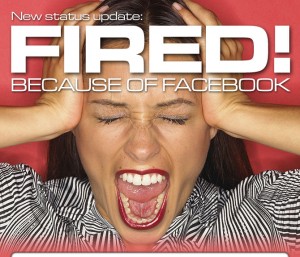 The dramatic growth of social media use in Canada on such sites as Facebook has raised novel legal issues for employers and employees. One such issue is whether or not an employee’s off-duty conduct online (i.e. posting personal status updates, photos or comments on Facebook at home) can get that employee fired. In short, the answer is yes.
Many Canadians still erroneously believe that what they post on their personal Facebook page is private. They feel little hesitation in coming home after a difficult day at work and griping publicly about their company, boss, co‑workers or quality of work. While it is important to protect freedom of expression and healthy discourse on labour relations issues, posting this type of content online may have serious consequences.
First, Facebook posts and comments can be produced in a legal proceeding where they might be relevant to the allegations made, even if that information is contained in a limited access area of an individual’s Facebook profile (see Leduc v. Roman [9], at para 31). Moreover, regardless of whether you intend your posts to be relatively private, courts and arbitrators have tended to conclude that posts on social media sites are easily disseminated and may be considered public if viewed by your “friends.”
Second, the current trend in Canada appears to be to uphold discipline and/or dismissals of employees for making inappropriate Facebook posts, namely, any posts which demonstrate insubordination, harassment, breach of any known workplace policy (e.g. on confidentiality, absenteeism, respect for human dignity, etc.), or which could cause harm to the reputation of the employer. These decisions are a wake‑up call to exercise extreme caution in what you post online, even if only to your “friends” on Facebook. This is particularly so where your Facebook friends include past and present co‑workers, or members of the public who could be customers or associates of your employer. It is difficult to predict who will read your comments, or in whose hands they will end up.
This year, arbitrators in both Ontario and Alberta had occasion to consider the circumstances in which they would uphold discipline imposed as a result of offensive Facebook posts made by employees.
In Bell Technical Solutions v. Communications, Energy and Paperworkers Union of Canada [10], Arbitrator Chauvin upheld the suspension of one technician who had made several insulting remarks about his manager on Facebook and upheld the dismissal of another technician who regularly complained about his job and made disparaging comments about both his manager and the company on his Facebook page. A third employee’s discharge was substituted with a one-year suspension without pay for the frequent insulting comments he made about his manager. His dismissal was not upheld because he did not disparage the company and had apparently been provoked by his manager. The comments made by the three employees were viewable by all of their Facebook friends, which specifically included other Bell Technical Solutions technicians. Notably, the manager was not identified by name in the posts but referred to as “gorilla,” which was understood by the employees to refer to their manager.
In coming to his conclusions, Arbitrator Chauvin noted at paragraph 112 of his decision that “the nature and frequency of the comments must be carefully considered to determine how insolent, insulting, insubordinate and/or damaging they were to the individual(s) or the company.” The suspended employee had only made a handful of comments about his manager, removed them once spoken to and ultimately expressed genuine remorse. The dismissed employee, on the other hand, carried on for 16 months making derogatory comments about both his manager and employer without any remorse, even mocking the employer’s requests to cease making these types of comments.
Similarly, in the Canada Post Corp. decision released this past spring (Canada Post Corp. v. Canadian Union of Postal Workers [2012] C.L.A.D. No. 85), Arbitrator Ponak upheld the discharge of a postal clerk with a lengthy 31 years of service because the employee had made a number of vulgar, insulting and threatening comments with respect to her supervisors (e.g. “Die B—- Die” and “I’m texting in sick, my idiot supervisor is 24”). These comments were brought to management’s attention by a co-worker and resulted in the targeted managers taking stress leave from their jobs on seeing the comments. In this case, the employee had not intended her comments to be public, but the arbitrator found she was still responsible for the consequences of her actions.
Notwithstanding Arbitrator Chauvin’s comment in Bell Technical Solutions, highlighting the frequency of inappropriate Facebook comments as a factor to consider, it is important to note that one Facebook post alone could be considered so offensive as to render the employment relationship untenable. This is particularly so if the employee creates a nexus between his or her comments and the employer, and the comments are considered to be public.
For example, in Wasaya Airways LP (Wasaya Airways LP v. Air Line Pilots Assn., International (Wyndels Grievance) (2010), 195 L.A.C. (4th) 1), a pilot with three and a half years of service posted a comment on his Facebook page that was disrespectful to First Nations people. Although he did not identify his employer directly, the post was considered to be so offensive that it undermined the employment relationship. The pilot’s post had the potential to harm Wasaya Airways’ reputation and did poison the pilot’s relationship with management. Indeed, Wasaya Airways is owned by several First Nations and predominantly provides services to First Nations communities. Because of mitigating factors, the pilot was forced to resign instead of being outright dismissed.
Last week, Justin Hutchings of London, Ontario, learned the hard way about the consequences of making an inappropriate Facebook post. Mr. Hutchings posted the offensive comment “Thank God this B—- is Dead” on teen bullying victim Amanda Todd’s memorial page, which was open to the public. Because Mr. Hutchings had identified his employer, Big & Tall Menswear, on his own profile, the employer received a direct complaint about the offensive post. Mr. Hutchings was fired for conduct that was considered contrary to the company’s policy of treating all individuals honourably and, arguably, for conduct that would bring the employer into disrepute. Regardless of whether or not Mr. Hutchings’ dismissal was warranted, let this serve as a reminder that Facebook posts are considered to be very much in the public domain and unsavoury commentary by you that reflects poorly on your employer or colleagues could easily result in negative repercussions for you in the workplace.
Iler Campbell LLP [11] is a law firm serving co-ops, not-for-profits, charities, and socially-minded small business and individuals in Ontario.
Note: Pro Bono provides legal information designed to educate and entertain readers. But legal information is not the same as legal advice — the application of law to an individual’s specific circumstances. While efforts are made to ensure the legal information provided through these columns is useful, we strongly recommend you consult a lawyer for assistance with your particular situation to obtain accurate advice.
Submit requests for future Pro Bono topics to probono@rabble.ca [12]. Read past Pro Bono columns here [13].